Autumn is creeping in, winter isn’t far behind, and in the UK that usually means one thing: rain. And probably quite a lot of it.
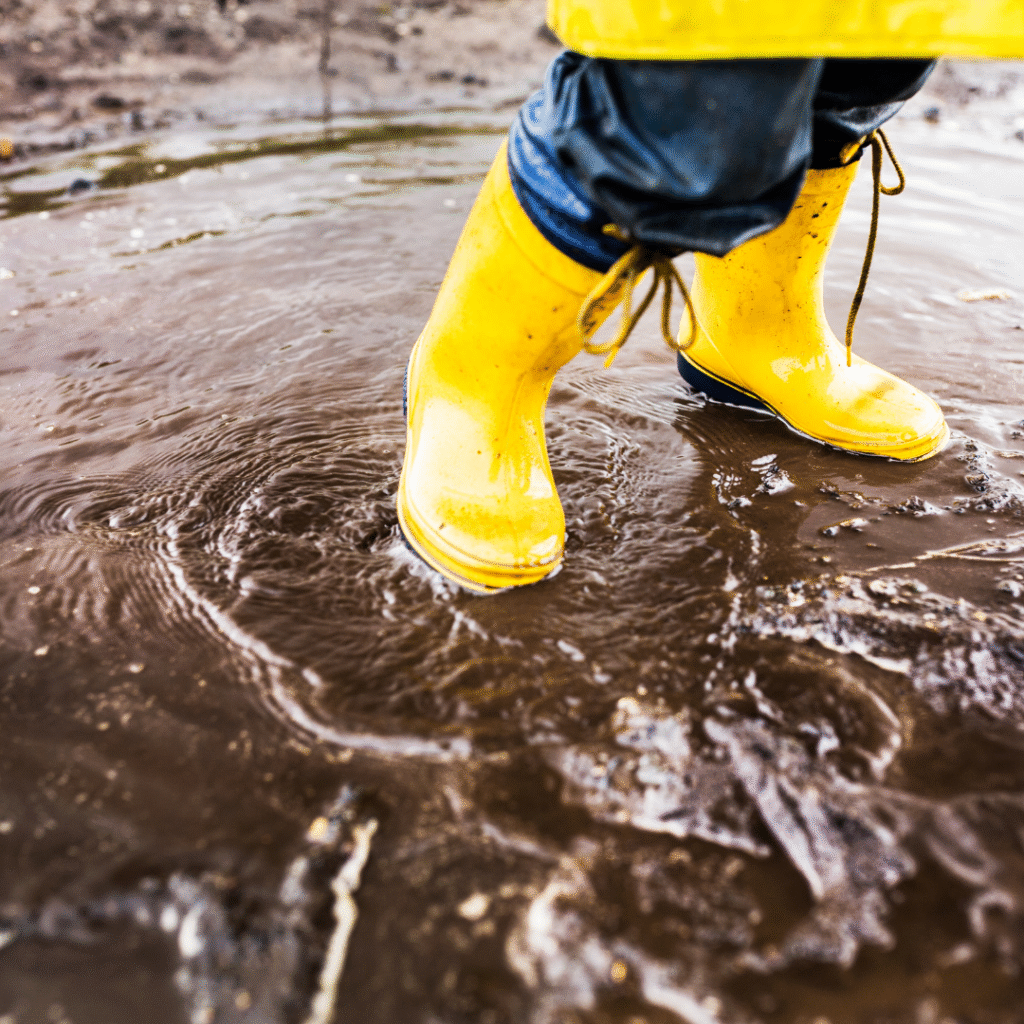
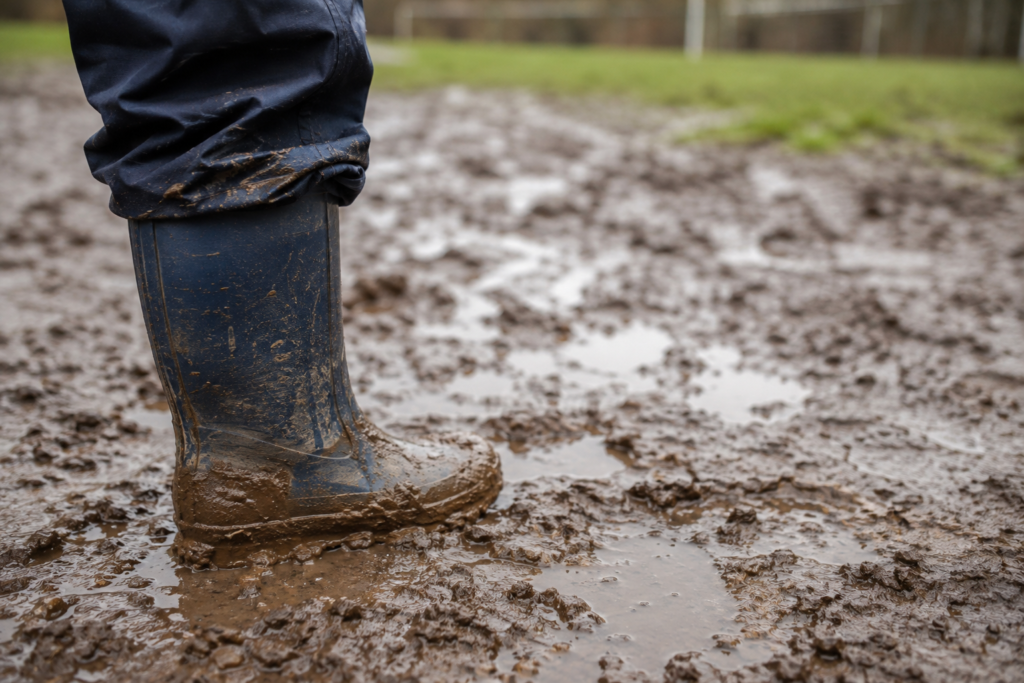
A bit of rain is great for the garden, but when the lawn starts feeling like a paddling pool, puddles refuse to disappear from the driveway or water keeps gathering around the patio, it might be time to think about garden drainage.
Two solutions you’ll often hear about are French drains and soakaways. They sound similar, but they actually do different jobs.
So, French drain vs soakaway: which one do you need?
What is a French drain?
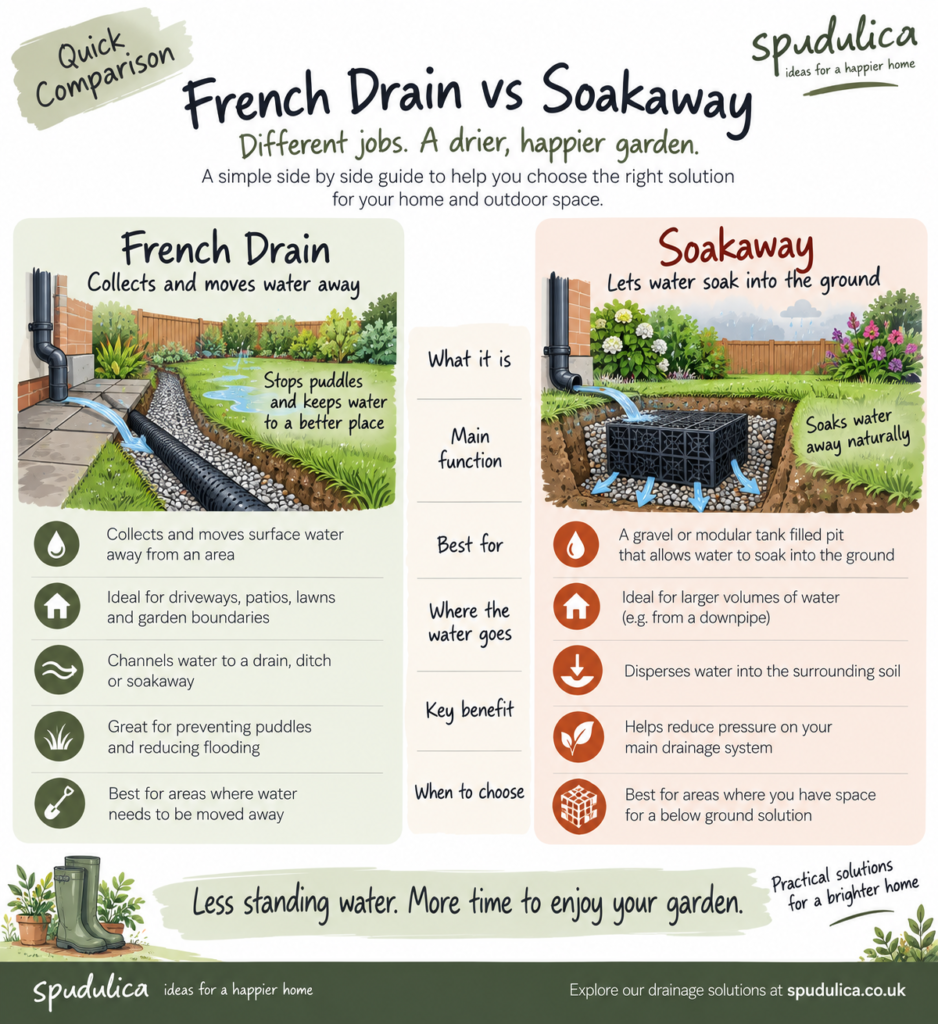
A French drain is basically a way of collecting unwanted water and moving it somewhere more suitable.
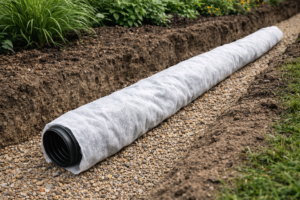
It normally consists of a trench containing gravel and a perforated drainage pipe. Water enters the trench and pipe before being channelled away from the problem area.
French drains are particularly useful around lawns, patios, driveways, paths and garden boundaries where water regularly collects.
Think of it as giving that annoying puddle somewhere else to go.
The important thing to remember is that a French drain moves water. It doesn’t make it disappear, so you still need to consider where that water will eventually end up.
What is a soakaway?
A soakaway does a slightly different job.
Rather than simply moving water, a soakaway provides an underground area where rainwater can temporarily collect before gradually soaking into the surrounding ground.
They’re commonly used for rainwater coming from roofs and downpipes, but can also form part of a wider garden, patio or driveway drainage system.
In simple terms, a French drain moves the water and a soakaway gives the water somewhere to go.
Can a French drain and soakaway work together?
Absolutely.
In fact, depending on your drainage problem, you might need both.
Imagine one side of your garden always becomes waterlogged after heavy rain. A French drain could collect that excess water and carry it through a drainage pipe towards a soakaway.
The soakaway then temporarily holds the water and allows it to gradually disperse underground.
Understanding where your water is coming from and where it needs to finish is often the easiest way to work out what drainage solution you need.


Which is best for a waterlogged garden?
If your main problem is standing water or a soggy section of lawn, a French drain may help move water away from that particular area.
If you already have water being collected, perhaps from a roof downpipe, and need somewhere suitable for it to discharge, you may be looking at a soakaway instead.
And if you need to collect water from a problem area and then safely disperse it underground, a combination of the two may be more suitable.
Every garden is different, though, so don’t start digging just yet.
Check your soil before installing a soakaway
This bit really matters.
A soakaway relies on the surrounding ground being able to absorb water.
Some soils drain very easily, while heavy clay soils can hold water for much longer. If the surrounding ground doesn’t drain effectively, putting more water underground isn’t necessarily going to solve your problem.
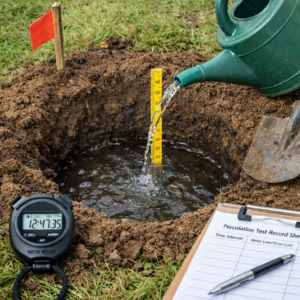
A percolation test can help establish how quickly water drains through your soil and whether a soakaway is suitable.
It’s much better to check first than dig a very large hole and discover afterwards that your garden doesn’t want to play along.
What size soakaway do I need?
There’s no single soakaway size that’s right for every home.
It depends on how much water you’re dealing with, the size of the roof or surface being drained and how quickly your soil can absorb water.
As a very rough starting point, we sometimes use around one soakaway crate per 10m² of roof area or one crate per 20m² of ground area when initially considering a project.
These are only rough guides, though. A percolation test and proper drainage calculations are the better option, particularly for larger projects or areas with existing drainage problems.
Don’t forget the geotextile membrane
If you’re researching French drains or soakaway crates, you’ll probably come across geotextile membrane too.
A suitable permeable geotextile helps separate your drainage materials from the surrounding soil while still allowing water through.
This can help prevent fine soil particles gradually working their way into the drainage system and affecting its performance.
It’s hidden away once the job is finished, but it’s an important part of many drainage installations.
French drain vs soakaway: the quick answer
If you need to collect and move unwanted surface water, you’re probably looking at a French drain.
If you need somewhere for collected rainwater to temporarily sit and gradually soak into suitable ground, you’re probably looking at a soakaway.
And sometimes the answer is both.
Our quick comparison graphic below gives you an easy side-by-side look at the two options.
Autumn and winter rain has a habit of finding every little drainage problem around the garden. Sorting those soggy areas now could mean fewer puddles, less standing water and a much happier garden over the wetter months.
And hopefully fewer occasions where you need your wellies just to put the bins out.
Explore soakaway crates, geotextile membranes and other garden drainage solutions at Spudulica.co.uk.