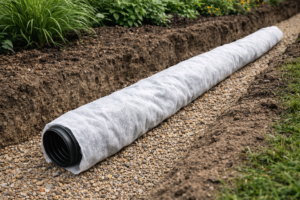
If you’re setting up a raised bed or planter, adding geotextile is one of those small steps that makes a big difference. It helps keep soil where it belongs, improves drainage, and gives your planter a longer, tidier life. The good news is working out how much you need is simpler than it sounds.
Start with the inside measurements
Geotextile lines the inside of your planter, not the outside, so the first step is to measure the internal size. You’ll need:
- the internal length
- the internal width
- the internal depth (height)
Stick to one unit, either centimetres or metres, to keep things straightforward.
Decide how much you want to line
Most planters benefit from lining both the base and the sides, but you can choose what suits your setup.
Base only
If you’re lining just the bottom of the planter, the amount of geotextile needed is simply the internal length multiplied by the internal width.
Base and sides
To line the base and all four sides in one piece, use this simple calculation:
- length + (2 × depth)
- width + (2 × depth)
This allows the fabric to sit across the base and run up the sides in one continuous sheet.
A quick example
For a raised planter that is:
- 1.2 m long
- 0.6 m wide
- 0.4 m deep
You’ll need a piece of geotextile measuring roughly 2.0 m by 1.4 m.
Always allow a little extra
It’s a good idea to add a bit of extra material to allow for folding into corners, overlapping, and trimming once it’s in place. Adding 5–10 cm all round or rounding up to the nearest convenient size usually works well.
Cut, place, and trim
Geotextile is very forgiving to work with. Cut it slightly oversized, place it into the planter, press it neatly into the corners, and trim any excess once you’re happy with the fit. There’s no need for fixings, the weight of the soil will hold everything in place.
Woven or non-woven geotextile, which should you choose?
Both woven and non-woven geotextiles work well in raised beds and planters, and the right choice depends on what you’re growing and how your planter is built.
Woven geotextile is strong and stable, making it a great choice for larger raised beds or deeper planters where you want extra structure and long-term durability. It allows water to drain while helping keep soil firmly contained.
Non-woven geotextile is more flexible and softer to handle, which makes it ideal for smaller planters, curved shapes, or quick installations. It offers excellent drainage and filtration, helping prevent waterlogging while keeping compost in place.
Both options are effective, and many gardeners simply choose based on the size of the planter and how easy they want installation to be.
A small step that makes a big difference
Lining your raised bed or planter with geotextile helps reduce weeds from below, improves drainage, and keeps everything looking neat for longer. It’s a simple addition that supports healthier plants and easier maintenance, whatever you’re growing.
If you’re unsure how much geotextile you need or whether woven or non-woven is best for your setup, it’s always worth measuring first and allowing a little extra. It saves time, avoids waste, and makes installation much smoother.