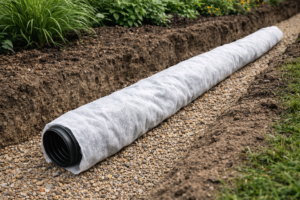
When it comes to ground preparation, the bits you don’t see are often the most important. A woven geotextile membrane might not look exciting, but it plays a huge role in keeping gardens, paths and driveways looking good and performing properly for years to come.
If you are working on a landscaping or groundwork project, woven geotextile could be exactly what you need to do the job once and do it right.

What is woven geotextile?
Woven geotextile is made by weaving strong polypropylene tapes together, creating a tough, durable fabric with excellent tensile strength. Unlike lighter membranes, it is designed to cope with load, movement and pressure from above.
This makes it ideal for projects where stability and separation are key.
The main benefits of woven geotextile
Woven geotextile really comes into its own when strength matters. Some of its biggest advantages include:
- Excellent ground separation
Stops soil mixing with aggregate, keeping sub-bases stable and effective. - High load-bearing strength
Ideal for driveways, paths, patios and areas with foot or vehicle traffic.
- Improved longevity
Prevents sinking, rutting and uneven surfaces over time. - Permeable design
Allows water to pass through while holding soil and aggregate in place. - Cost-effective protection
A relatively small addition that can save major repair work later on.
It is one of those materials that quietly does its job in the background, but makes a huge difference long term.
Where woven geotextile really shines.


Woven geotextile is best suited to projects that need strength and structure, such as:
- Driveways and parking areas
- Garden paths and walkways
- Patios and paved areas
- Bases for sheds, greenhouses and cabins
- Areas with poor or soft ground conditions
If your project involves weight, repeated use or ground movement, woven geotextile is usually the smarter option compared to lighter membranes.
Easy to install, easy to trust
Despite its strength, woven geotextile is simple to work with. It rolls out easily, cuts neatly to size and lays flat across prepared ground.
A typical install looks like this:
- Clear and level the ground
- Roll out the woven geotextile membrane
- Overlap joints where needed
- Lay aggregate, sub-base or soil on top
Once covered, it gets to work straight away, reinforcing your ground structure without adding complexity to the job.

Woven vs non-woven: choosing what’s right for you
While non-woven geotextile is ideal for drainage and filtration applications, woven geotextile is the go-to choice for separation and load-bearing tasks.
If your priority is strength and stability, woven geotextile is usually the better fit. Many projects even use both types in different areas, depending on what the ground needs to do.
Woven geotextile at spudulica.co.uk
At Spudulica, woven geotextile is available in practical sizes to suit everything from small DIY jobs to larger landscaping projects.
Adding woven geotextile might feel like a small step, but it is one that pays off for years. Better stability, less maintenance and a finish that stays looking right long after the project is complete.
If you are investing time and effort into your outdoor space, woven geotextile could be the layer that makes all the difference.